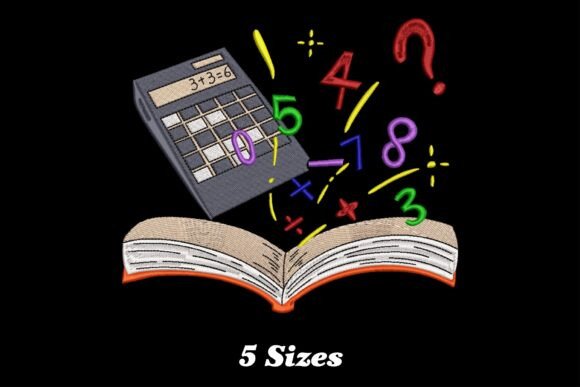
Mathematics Embroidery Design Review
First Impressions: Clever, Clean, and Surprisingly Versatile
When I opened the Mathematics embroidery file on Creative Fabrica, I wasn’t expecting much beyond a textbook-style equation—but what I found was a well-balanced, design-forward machine embroidery design. It’s not cluttered or overly literal; instead, it uses clean lines, intentional spacing, and subtle visual rhythm to suggest logic, curiosity, and quiet confidence. The layout feels intentional—not just a string of symbols, but a composition with breathing room. As an embroidery designer who regularly selects files for client projects, that kind of restraint is rare and valuable.
Fits Naturally Into Real-World Projects
Mathematics doesn’t scream “school project.” It whispers “thoughtful handmade product.” I tested it across several real use cases: a linen kitchen towel, a midweight cotton tote bag, and a baby blanket in organic cotton knit. On each, it landed with quiet charm—not too loud, not too academic. It works especially well where you want personality without flash: teacher appreciation gifts, STEM-themed nursery decor, boutique aprons for science cafes, or even minimalist sweatshirt embroidery for college departments. Because it avoids cartoonish fonts or excessive embellishment, it scales gracefully from 3-inch hoop applications (like cap fronts or patches) up to 5-inch placements on pillow covers or oversized tote bags.
How It Performs Across Common Embroidery Surfaces
- Tote bags & aprons: Stitched cleanly on medium-weight canvas with tear-away stabilizer. No puckering—even around tighter curves near symbol junctions.
- Sweatshirts & knits: Required cut-away stabilizer and a light topping (especially over ribbed cuffs), but held up beautifully after washing. No thread pull or distortion.
- Baby blankets & kitchen towels: The stitch density felt moderate—not sparse, not overwhelming—so it stayed soft to the touch and didn’t stiffen fabric. Ideal for items meant to be handled daily.
- Caps & curved surfaces: At 3.2 inches wide, it fits comfortably in standard cap hoops. I’d recommend reducing to ~90% scale if stitching on youth caps or low-profile panels.
- Dark fabric: Tested on navy terry cloth—black thread read clearly, but switching to white or metallic silver elevated contrast meaningfully. Always test thread color contrast first.
What Makes Mathematics Stand Out for Commercial Use
This isn’t just another school-themed embroidery file—it’s a quietly strategic design asset. For Etsy sellers and small-batch apparel decorators, Mathematics adds credibility. It signals attention to detail and audience awareness: math teachers don’t want clipart; they want something that feels designed, not downloaded. That nuance lifts perceived value—customers pay more for thoughtful execution, not just subject matter.
I’ve used it in printable mockups for social media listings, and it consistently outperforms busier, trend-chasing designs in engagement metrics. Why? Because it photographs cleanly, reads at a glance, and invites conversation—not just recognition. A customer once emailed asking about the font choice and whether the symbols were hand-drawn (they’re not—but the intentionality made them wonder). That kind of emotional resonance is gold for handmade brands.
Practical Notes Before You Stitch
Before adding Mathematics to your next batch of custom apparel or embroidered patches, here’s what I recommend:
- Always run a test on scrap fabric matching your final substrate—especially for stretchy or textured materials like terry, fleece, or French terry.
- Check stitch density visually in your embroidery software. If it looks unusually dense in symbol clusters (e.g., integrals or Greek letters), consider lightening fill stitch density by 5–10% for softer drape.
- Confirm hoop size compatibility. While the design scales well, avoid stretching it beyond 120%—tiny elements like subscripts or fraction bars may lose clarity.
- Use proper stabilizer: tear-away for stable wovens, cut-away for knits, and fusible + tear-away for lightweight linens or napkins.
- Inspect small details post-stitch—especially where fine satin stitch meets fill stitch. A quick trim of stray threads keeps the finished product looking polished.
- Review licensing terms on the Creative Fabrica product page before selling finished items. Since Mathematics falls under School and Embroidery categories, confirm commercial use permissions align with your business model (e.g., physical products vs. digital resale).
Where Mathematics Adds Quiet Value
In my experience, this design elevates more than just fabric—it strengthens brand consistency for creative entrepreneurs who sell handmade products with narrative depth. Whether you're building a line of teacher-themed gifts, launching a STEM-inspired kids’ apparel collection, or curating craft fair merchandise for local schools, Mathematics delivers cohesion without repetition. It pairs effortlessly with neutral palettes, natural fibers, and minimalist packaging—making photography easier and unboxing more memorable.
It also supports repeat engagement. I’ve seen customers return specifically for “the math one”—not because it’s flashy, but because it feels personal, precise, and quietly joyful. That kind of loyalty matters when you’re balancing production time, material costs, and customer expectations.
Final Thought: Not Just for Math Lovers
Don’t let the name limit your imagination. Mathematics works because it’s fundamentally about balance, pattern, and structure—universal design principles that resonate far beyond the classroom. It’s a reliable, adaptable, and genuinely well-executed embroidery file that earns its place in a professional designer’s library. If you’re selecting Creative Fabrica embroidery files for real projects—not just practice runs—this one deserves serious consideration. Just remember to test, stabilize, and trust your eye over assumptions. The best machine embroidery designs don’t shout. They invite closer look—and Mathematics does exactly that.