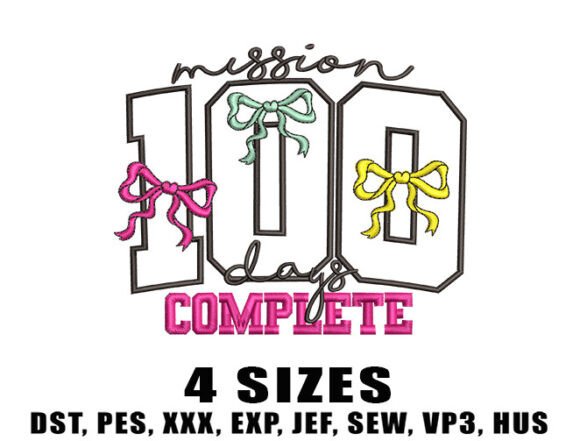
100 Days Complete
As a designer and embroidery product reviewer, I often find myself evaluating machine embroidery designs with a critical eye—especially when they’re meant for real-world use. 100 Days Complete is one such design that promises charm and personality. But does it deliver in practical embroidery projects? Let’s break it down.
The First Impression
From the moment I laid eyes on 100 Days Complete, I noticed its whimsical, playful energy. The design has a soft, hand-drawn feel that feels approachable and nostalgic. It’s not overly complex, but it carries enough detail to stand out without overwhelming the fabric it’s stitched onto. The layout is balanced, with a clear focal point that makes it ideal for items like tote bags, baby clothes, or even home decor.
The theme of 100 Days Complete suggests something personal, maybe a milestone or a celebration. It could be used as a custom embroidered patch, a sweatshirt embroidery, or even a holiday gift. The visual personality is warm and inviting, which makes it perfect for handmade products that aim to connect emotionally with the end user.
Real-World Embroidery Performance
I tested 100 Days Complete on several fabrics to see how it performed in different scenarios. On a cotton t-shirt, it looked clean and well-defined. The stitch density was just right—enough to hold up over time without being too heavy. On a thicker towel, the design still came through clearly, though I would recommend using a stabilizer to prevent puckering.
For custom apparel, this design works well on light-colored fabrics where the thread colors pop. However, on dark backgrounds, the contrast can be tricky. If you're planning to use it on a black sweatshirt or a navy-blue cap, consider adjusting the thread color or using a lighter shade for better visibility.
When it comes to baby embroidery, 100 Days Complete has a gentle aesthetic that fits well with nursery decor or onesies. The design isn’t too intricate, so it won’t be lost on small fabrics. It also works as an embroidered patch for backpacks or jackets, where the details remain visible even at a distance.
Where to Use It Carefully
While 100 Days Complete is versatile, there are some situations where it might not perform as well. For instance, on small hoop sizes, the design could feel cramped. If you're working with a limited space, you may need to adjust the size or simplify parts of the design.
On textured fabrics, like denim or canvas, the design might not sit as smoothly. Similarly, on thin or stretchy materials, the stitches can sometimes pull or distort. In those cases, using a proper stabilizer is essential to keep the design looking neat and professional.
Dense stitch areas or detailed corners can be a challenge. If the design has tight curves or intricate elements, it might require more careful handling during the embroidery process. Tiny lettering or decorative accents could also be at risk of being lost if not properly set up.
Impact on Visual Appeal and Product Value
100 Days Complete adds a unique touch to any project. Its charm translates well into finished products, making it a great choice for personalized gifts or boutique merchandise. When used on a tote bag design or a custom sweatshirt, it elevates the overall look and gives the item a handmade feel that customers appreciate.
From a commercial perspective, this design can boost customer trust and engagement. A well-executed embroidery project with 100 Days Complete can make your Etsy listings or craft fair displays stand out. It also supports brand consistency, especially if you’re targeting a niche market that values creativity and individuality.
For small shop products or digital embroidery files, 100 Days Complete offers flexibility. It can be used in printable mockups, design assets, or as part of a larger collection. Just make sure to check the licensing terms before selling finished items or digital products.
Practical Designer Notes
Before committing to any embroidery project, I always recommend testing the design on scrap fabric. This helps identify any potential issues with stitch density, thread color contrast, or fabric compatibility. For 100 Days Complete, I’d suggest trying it on both light and dark backgrounds to see how it looks in different contexts.
Also, pay attention to the hoop size. If you’re working with a large design, make sure your machine can handle it. Check the stabilizer type, especially if you’re using it on delicate or stretchy fabrics. And don’t forget to review the stitch count and file format—though specific details aren’t provided here, they’re important for ensuring smooth execution.
Finally, if you’re an Etsy seller or a craft business owner, consider how 100 Days Complete fits into your product lineup. It’s a great addition for seasonal items, personalized gifts, or holiday embroidery projects. Just remember to confirm the licensing terms before selling anything that includes this design.
Final Thoughts
100 Days Complete is a charming, versatile design that can enhance a variety of embroidery projects. Whether you're creating custom apparel, baby items, or small shop merchandise, it brings a sense of personality and warmth to the finished product. With proper preparation and attention to detail, it can become a valuable asset in your creative toolkit.
As a designer, I believe in choosing embroidery files that not only look good but also work well in real-life situations. 100 Days Complete checks those boxes, making it a solid choice for anyone looking to add a whimsical touch to their handmade products or commercial designs.